figured · species
Tamo Ash Veneer
Japanese ash with a rare peanut-shell figure — a swirling, three-dimensional pattern unlike any other veneer.
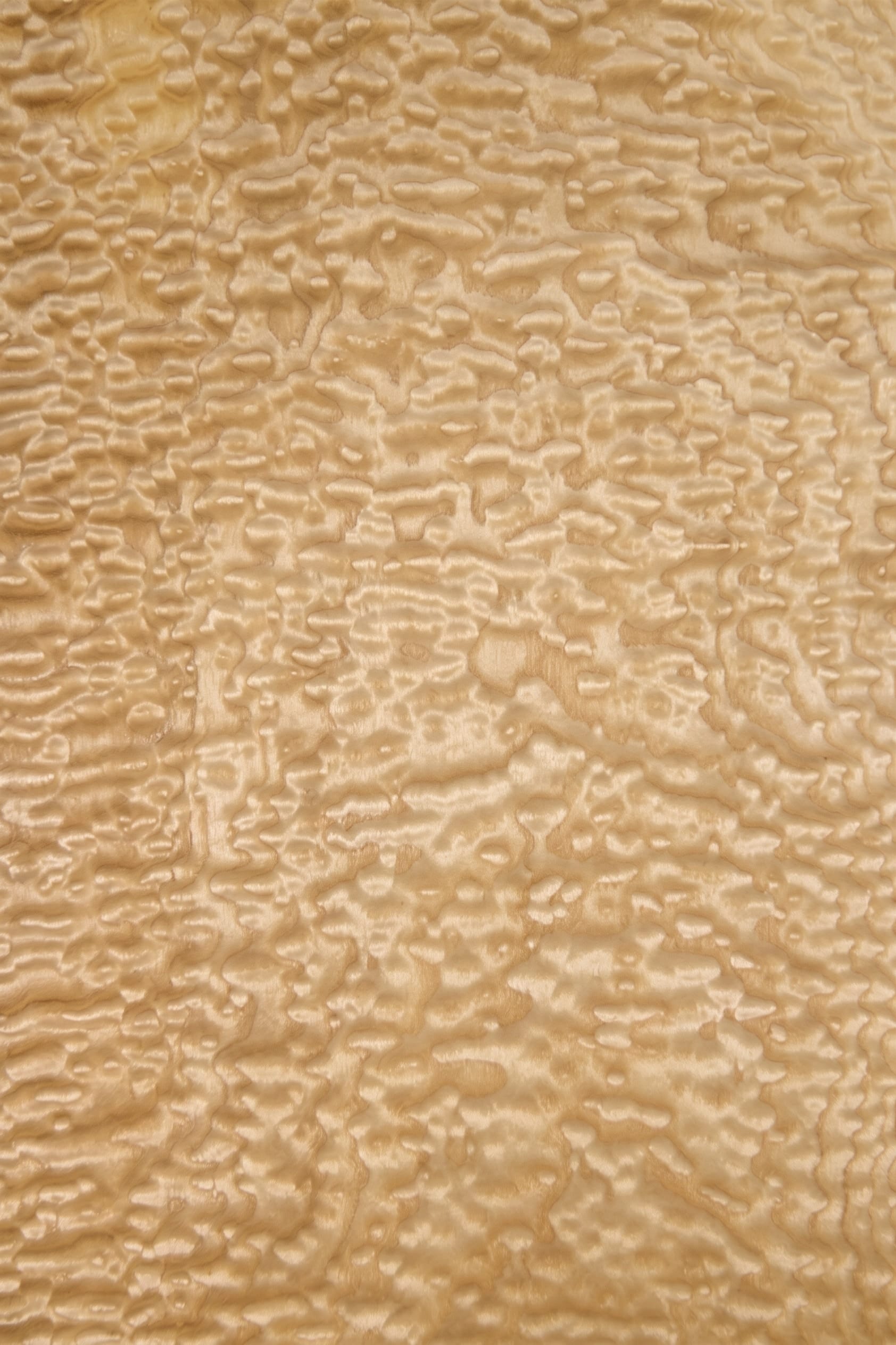
The heartwood is a light to medium brown color. Sapwood can be very wide, and tends to be a beige or light brown; not always clearly or sharply demarcated from heartwood. Deeply figured grain patterns are possible, sometimes called “peanut” figure, so called because the rotary-sliced veneer has an almost three-dimensional patterning that looks like peanut shells.
Tamo — Fraxinus mandshurica, the Manchurian or Japanese ash — carries a figure that has no real equivalent anywhere else in the veneer catalog: a dense, swirling pattern of rounded lobes, universally called peanut-shell figure because that is exactly what it looks like. Under finish it reads as three-dimensional, like a surface pressed rather than sliced.
The figure is not a property of the species. It occurs in isolated pockets within isolated trees, which is why tamo is expensive and why a flitch is rarely uniformly figured from end to end — the peanut concentrates in some leaves and fades toward plain ash in others. Approve the actual leaves, not the species.
That makes it feature material rather than field material. It is at its best as a panel, a door face or an inset where the whole figure can be seen at once, and it fights with anything busy nearby. Tell us the panel size first and we will tell you whether we can cover it. Available raw, two-ply, paper-backed, and pressed to panel.
Formats
Tamo Ash is available as
By location
Tamo Ash Veneer near you
Contact
Price tamo ash veneer
Tell us the format, the quantity and the delivery city. Or call (502) 330-5688 — Todd will tell you honestly whether the flitch will carry the job.