
Reference
Veneer specs, grades & matching
What to put on a drawing, and what we need to know to quote it. If something here is not covered, call — most specifications start as a conversation.
Panels
Sheet sizes and cores
Panels are built on MDF, particleboard or hardwood core — all three standard and always available. Sheet sizes are 4×8, 4×10 and 4×12, with 5×8, 5×10 and 5×12 on request; end-matched sheets can be made beyond those dimensions. Sheets ship uncut.
Call, text or email to discuss a specification — tell us the species, cut, core, sheet size and quantity and we will come back with pricing and lead time. Panels cut to a drawing, sequence matching and radius work are covered on custom veneer sheets and panels.
Formats
How veneer is supplied
Raw wood veneer — the sliced leaf with no backer. The most flexible option and the least forgiving to handle; suits shops with a press.
Two-ply (wood-on-wood) — a face veneer bonded to a thin wood backer with the grain crossed. Far more stable than raw, and flexible enough for curved work. This is what goes on radius walls and columns.
Paper-backed — face veneer on a 10-mil or 20-mil paper backer. Large format, contact-adhesive friendly, consistent yield. The usual choice for wall covering.
Architectural plywood — the veneer already pressed to a panel, ready to cut and install. No press required at your end.
Cutting
Slicing methods
- Rift
- Cut at a slight angle to the radius so the medullary rays are avoided. Gives the straightest, most uniform vertical grain — the standard for contemporary interiors.
- Quartered
- Cut on the radius. Straight grain, and in oak it brings out the ray fleck.
- Plain sliced
- Cut through the log parallel to a line through its center. Produces the familiar cathedral figure.
- Rotary
- The log is turned against a fixed blade, peeling a continuous sheet. Wide leaves, bold and variable figure.
- Half round
- A shallower rotary cut across the growth rings, between plain sliced and rotary in character.
Layup
Matching methods
- Book match
- Alternate leaves are flipped like the pages of a book, so adjacent leaves mirror each other. The most common match.
- Slip match
- Leaves are slid across in sequence without flipping, so the grain repeats rather than mirrors. Avoids the barber-pole effect on some species.
- Random match
- Leaves are deliberately mixed for a planked, non-repeating look.
- Radial / sunburst
- Wedges cut and laid so the grain radiates from a center point. Used on round tops.
- Sequence matched
- Panels are numbered and supplied in order so the figure runs continuously across a whole elevation. Specify this early — it has to be cut that way.
- End match
- Leaves joined end to end to reach lengths beyond a standard sheet.
Material
Natural characteristics and grading
Veneer is a natural material. Color varies between logs and within a single log, mineral streak and small knots occur, and figure is never perfectly uniform. Grading sets the limits on how much of that variation is acceptable — but it does not eliminate it, and a sample is the only reliable way to judge a species before committing.
For any run that has to look continuous, specify sequence matching and order the whole quantity at once from the same flitch. Coming back for more later means a different log, and it will not match.
Why veneer rather than solid wood
A single log yields far more surface as veneer than as lumber, so figured and rare species are available at architectural scale where solid stock would be impossible or ruinous. Panels are dimensionally stable in a way solid wood is not — they do not cup or move seasonally — and the same flitch can face an entire elevation.
The fuming process
Fuming exposes timber to ammonia vapor, which reacts with the tannins already in the wood and darkens it right through rather than sitting on the surface as a stain would. The color cannot be sanded off, and it deepens the figure rather than obscuring it. White oak and eucalyptus take it particularly well.
-
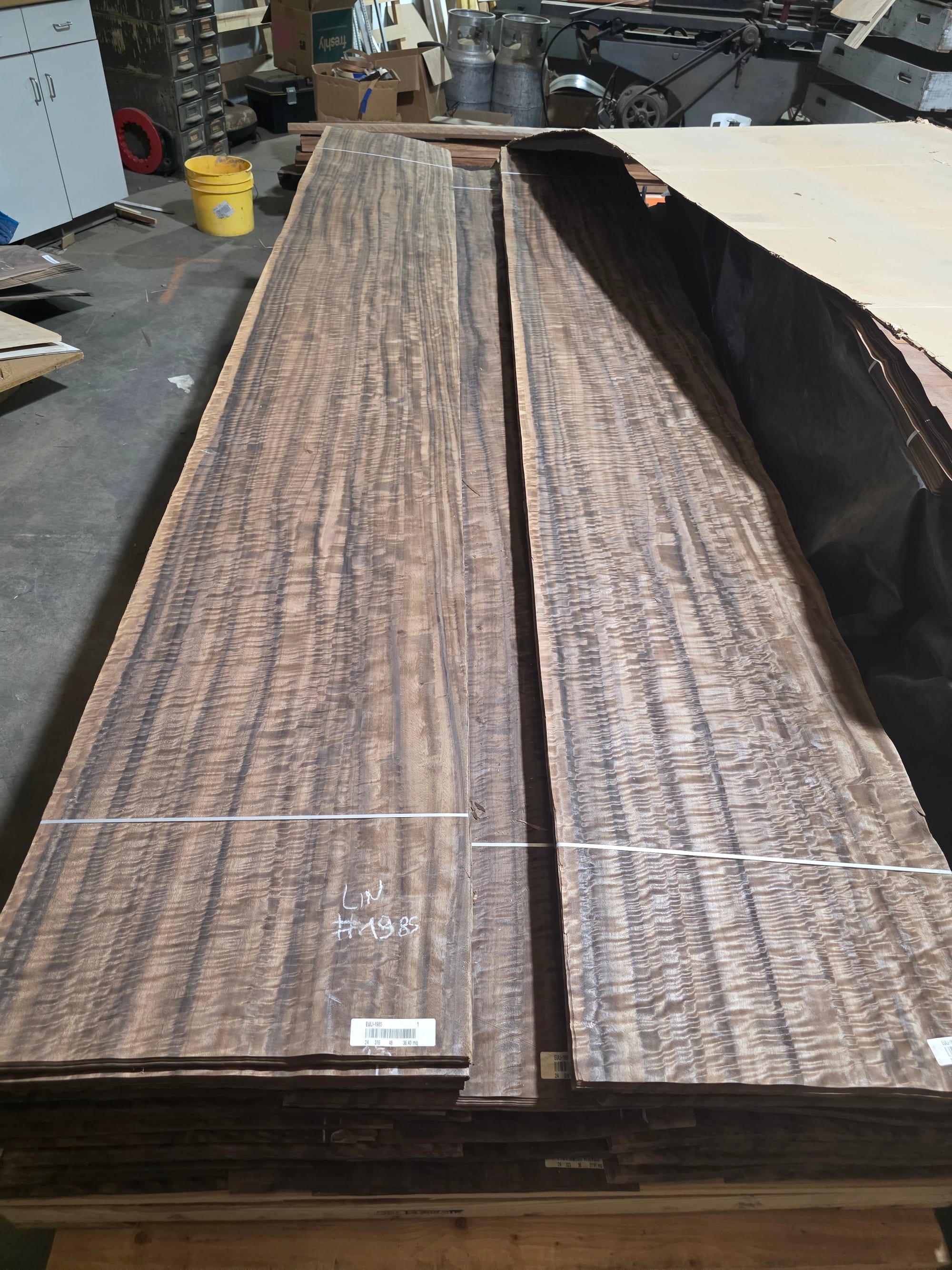
A fumed eucalyptus flitch, still bundled -
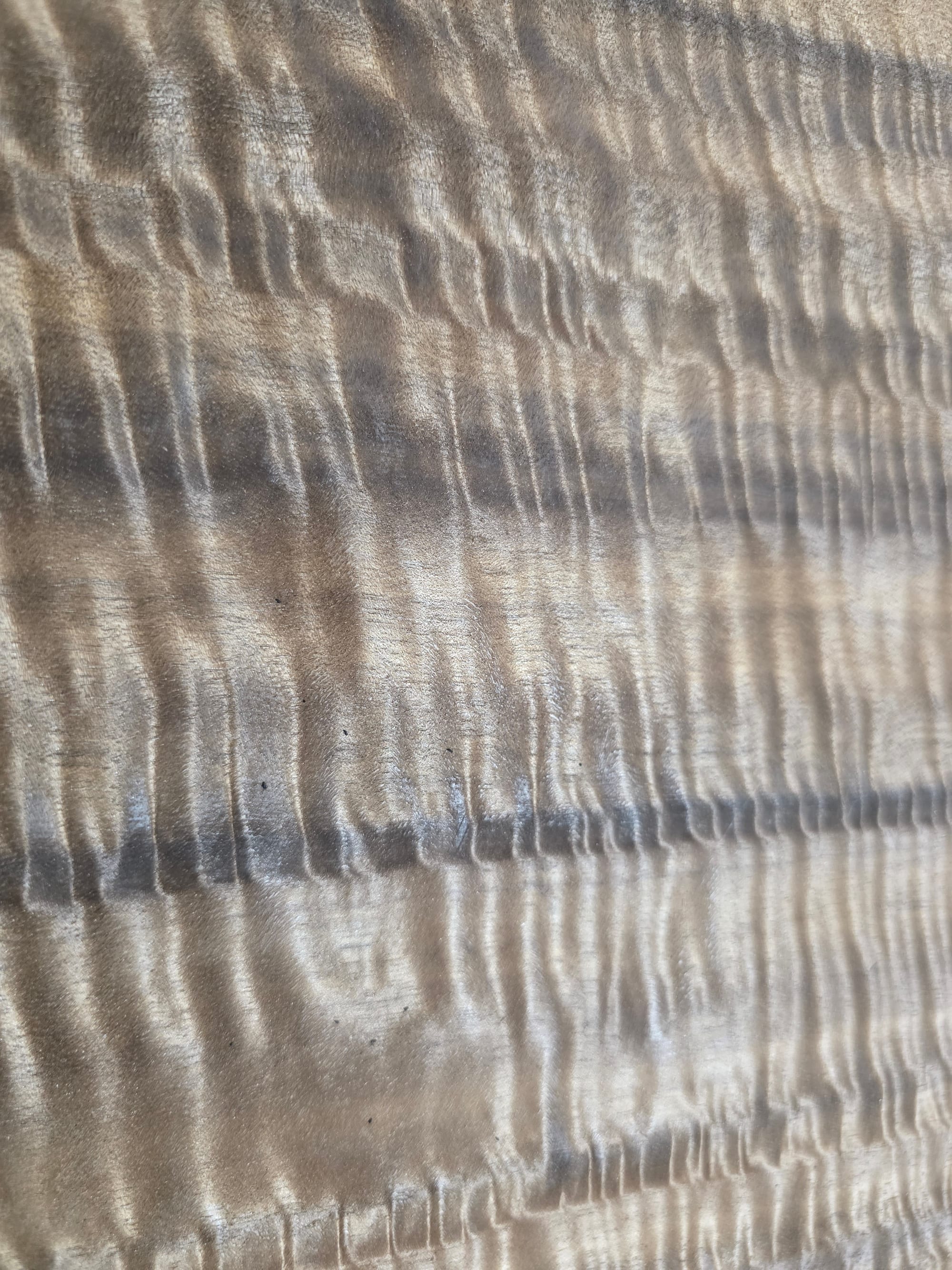
The figure, close up -
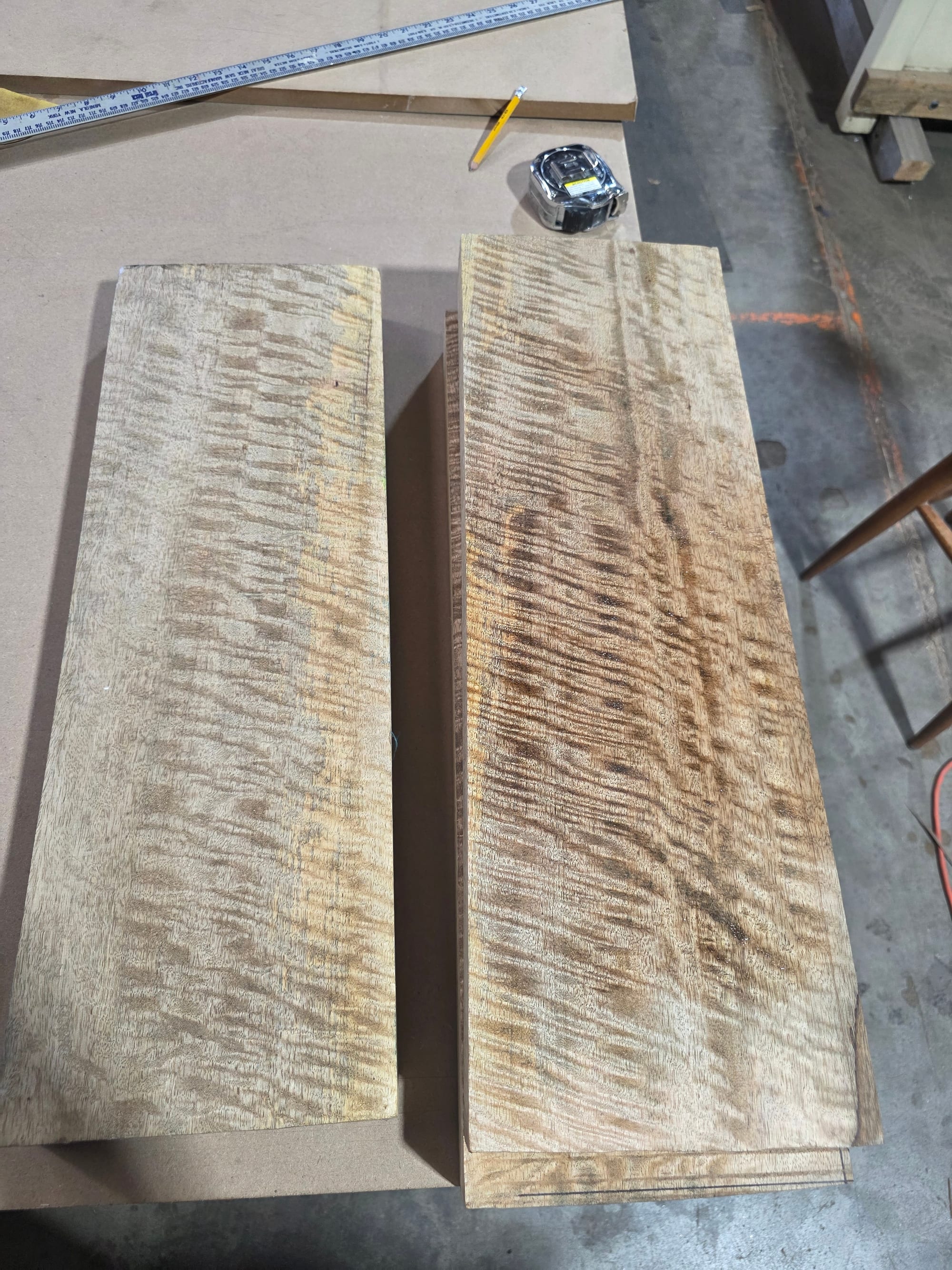
Two leaves off the stack
In the shop
What a flitch looks like
-
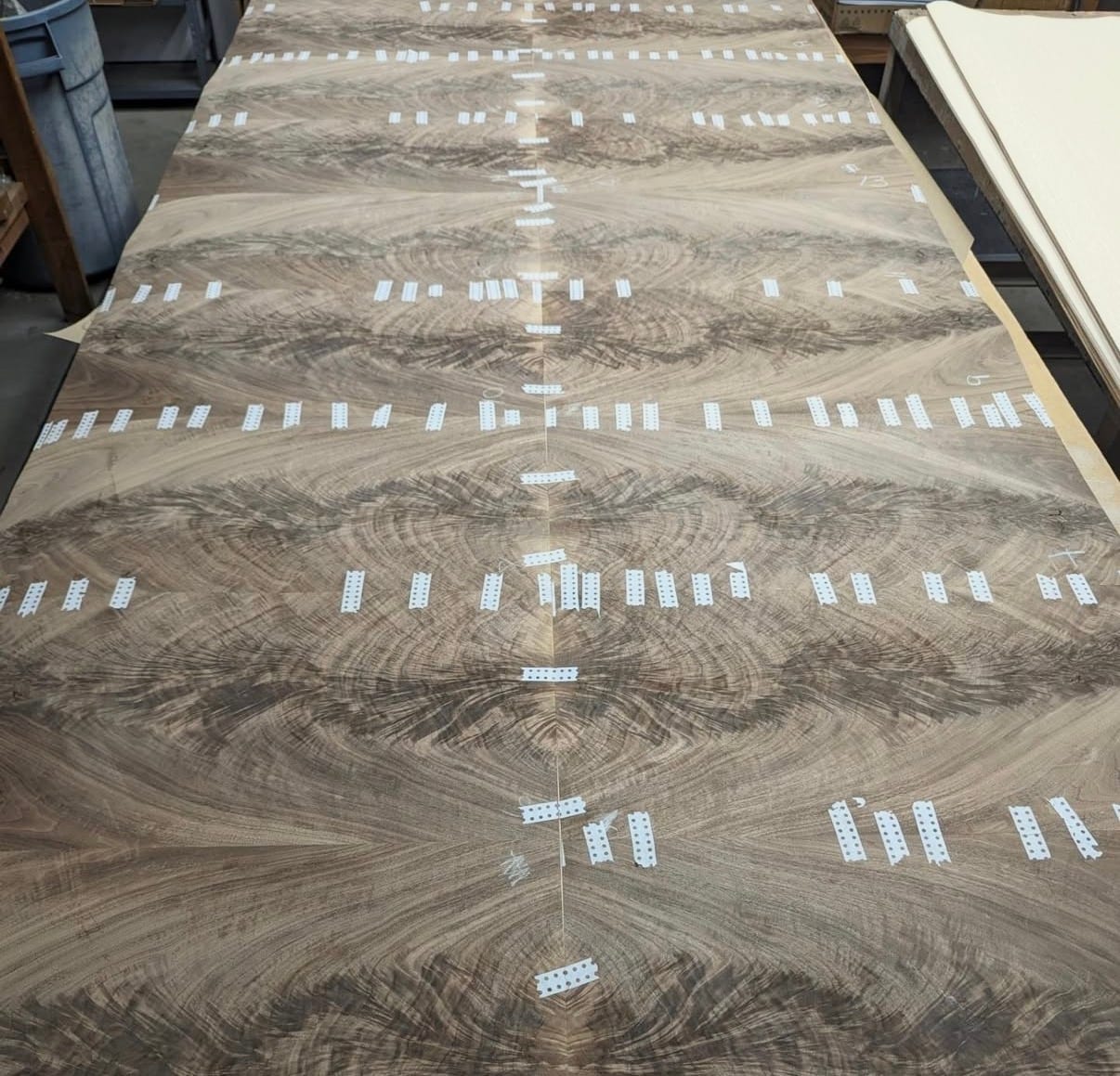
A sequence taped up before pressing -
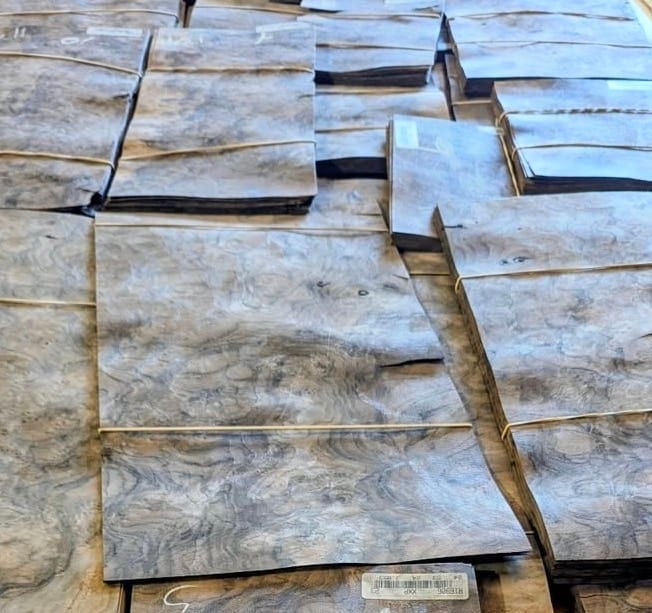
One burl, many flitches -
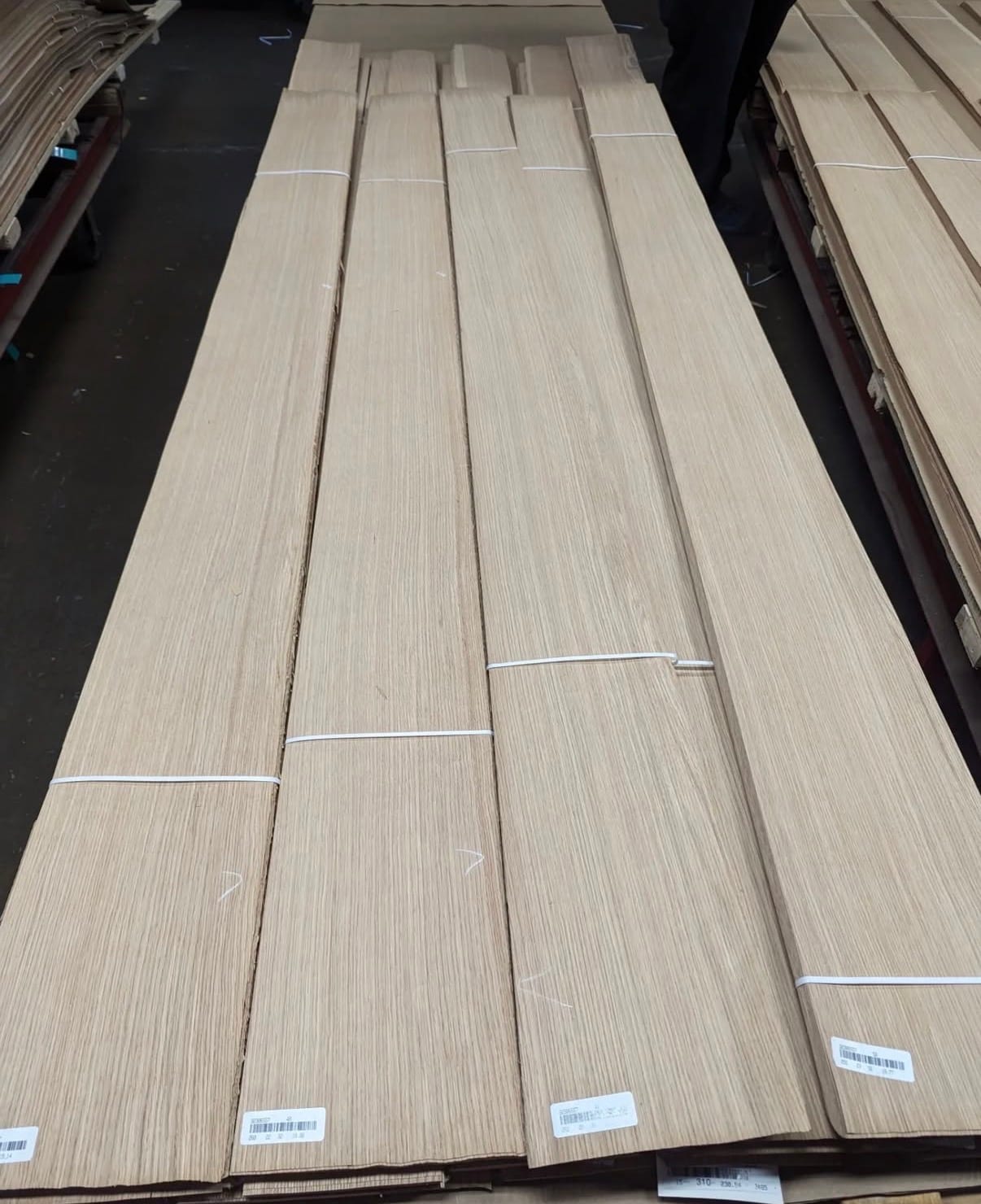
Rift white oak bundles
Contact