exotic · species
Afromosia Veneer
A fine-textured West African hardwood in warm honey-brown, often specified as a sustainable teak alternative.
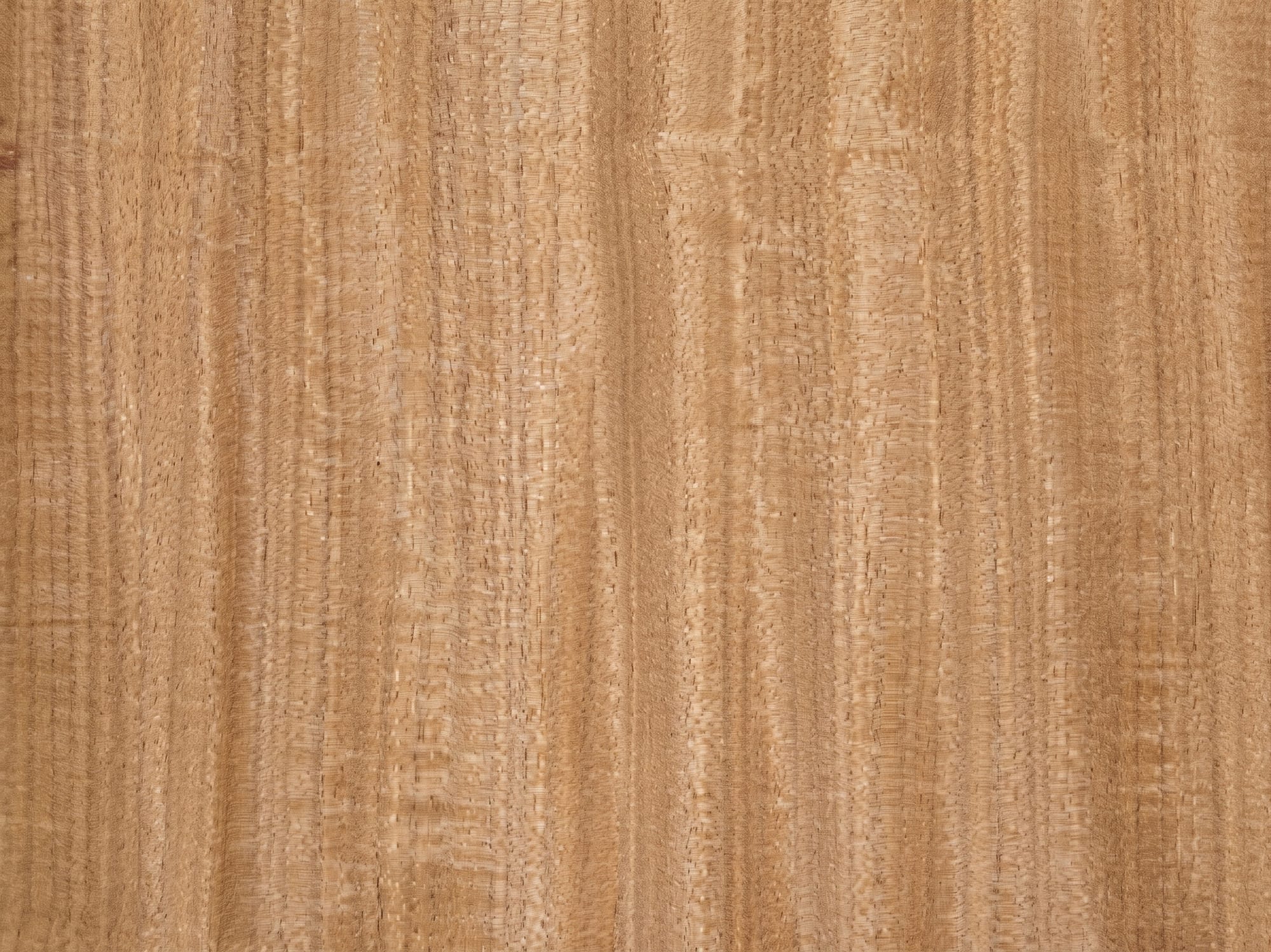
Heartwood is typically a yellowish brown, occasionally will have an either reddish or olive hue. Color tends to darken with age. Narrow sapwood is pale yellow and is clearly differentiated from the heartwood.
Afromosia — Pericopsis elata, also sold as afrormosia or assamela — is the timber people reach for when they want teak and cannot have it. It is finer in texture than teak, harder, and without teak’s oiliness, which makes it easier to glue and finish. The grain is usually straight to narrowly interlocked, and the fresh color is a warm honey brown.
That fresh color is the thing to understand before you specify it. Afromosia darkens markedly with light exposure, moving from honey toward a deep russet brown over months rather than years. A sample approved today does not describe the wall in a year’s time, and a panel installed later than the rest of a run will visibly lag it until it catches up. If part of a job is phased, say so at order and we will keep the material together rather than let half of it age on a rack.
It is also listed on CITES Appendix II, so it travels with permits and that shows up as lead time rather than as a surprise at the door — worth raising at drawing stage, not at delivery. Available raw, two-ply, paper-backed, and pressed to panel, sequenced from one flitch.
Formats
Afromosia is available as
By location
Afromosia Veneer near you
Contact
Price afromosia veneer
Tell us the format, the quantity and the delivery city. Or call (502) 330-5688 — Todd will tell you honestly whether the flitch will carry the job.